

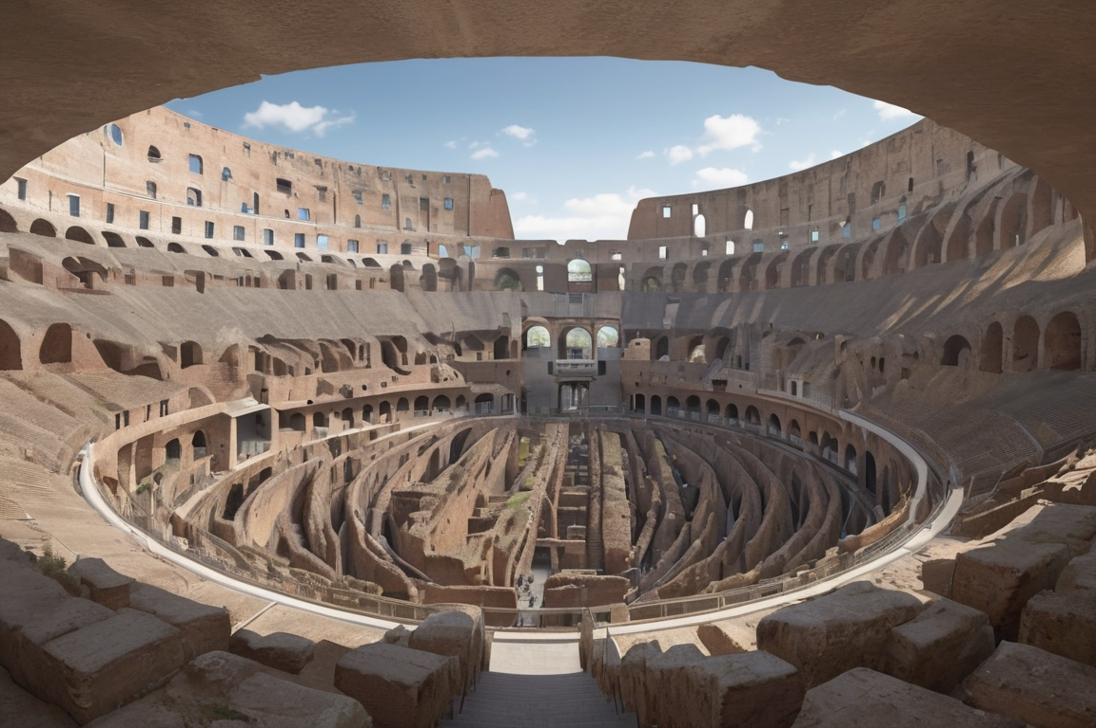
The Italian government is developing an ambitious project to create a retractable floor in the Colosseum amphitheater in Rome, which will allow spectacular events to be held directly on the arena once again. This decision is driven by the desire to reintegrate the Colosseum into the cultural and tourist life of modern Rome, expanding the possibilities for its use.
The project, proposed by the Archaeological Park of the Colosseum and the Italian Ministry of Cultural Heritage, Activities, and Tourism, includes the restoration of the destroyed arena floor and the introduction of modern technologies. The core of the project involves restoring the historical arena floor that was destroyed in the past, with the addition of a high-tech retractable structure. This innovation will not only bring back the historical functionality of the amphitheater but also offer tourists a unique opportunity to see the underground spaces of the Colosseum and enjoy its grandeur from the very center of the arena.
A key element of this plan will be the retractable floor, which will be placed in the center of the arena, covering the hypogeum—the underground section that was used in ancient times to lift animals and gladiators to the arena. The hypogeum of the Colosseum is a complex two-level structure that housed numerous lifts designed to bring fighters and wild animals to the arena. This underground area was uncovered after the wooden floor, which once covered the arena, was destroyed.

The new retractable floor will be equipped with modern lifts to ensure connection between the underground area and the arena itself. This will allow for more exciting and varied performances and events. The project is expected to be completed by 2023, with 18.5 million euros allocated for its implementation. All interested development teams can submit their applications to participate in the project by February 1st.

The Colosseum, built in 80 AD, is not only one of the greatest monuments of Ancient Rome but also one of the most famous symbols of modern Rome. This grand amphitheater, which could hold between 50,000 to 80,000 spectators, was designed for gladiator battles and other public spectacles during the Roman Empire. However, with the fall of the empire, the arena fell into disrepair. Nevertheless, the Colosseum remains one of the most visited attractions in Rome, drawing around seven million tourists from around the world every year. The restoration and modernization of its structure will further strengthen its cultural and historical significance, as well as bring unique spectacles back to the legendary arena.
Photo: Nicholas Hartmann, Wikimedia Commons